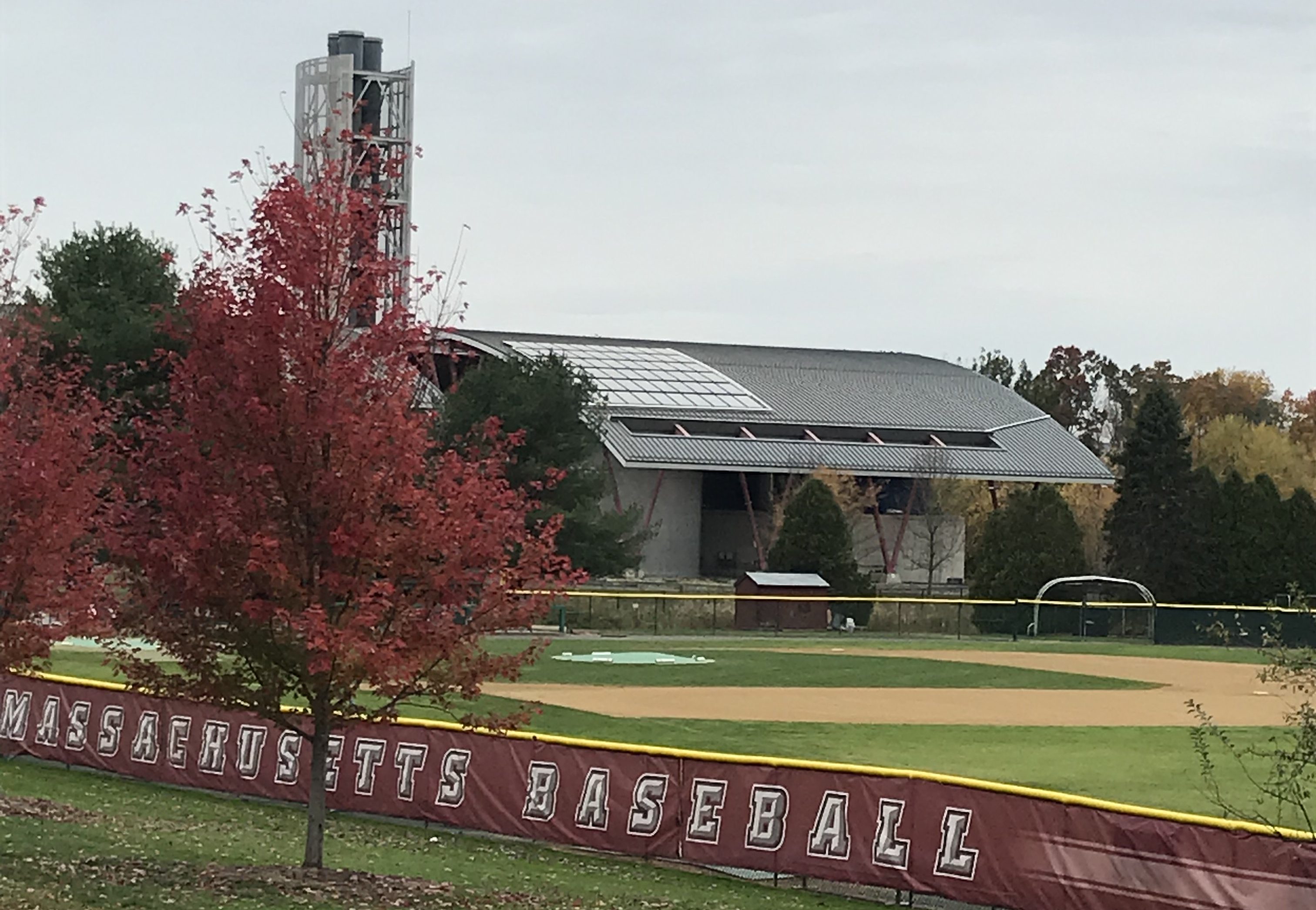
Blockbuster Betts, second attempt

This whole Mookie Betts trade has been nothing short of a pounding headache for the baseball connoisseur. Chaim Bloom and the Boston Red Sox supposedly agree to official terms with the Los Angeles Dodgers and pull out of the Minnesota Twins deal.

 With the Red Sox being skeptical about Brudsar Graterol’s medical history, the Red Sox determined that Graterol would be better fit as a reliever and backed out of the deal. Original deal included the Red Sox obtaining Graterol and Verdugo, the Dodgers with Betts, Price and cash and Twins with Kenta Maeda. The reason why this fell through was because Graterol was projected to be a starter for the Red Sox and further review of his medical records showed he had Tommy John surgery in 2016 and shoulder problems in 2019. The Red Sox felt like they deserved more in the deal, which I highly agreed with. The reworked trade looks like this as now: 

  • Dodgers receive: Betts, Price, cash (from Red Sox) and Brusdar Graterol, 2020 Competitive Round B draft pick (from Twins)
  • Red Sox receive: Alex Verdugo, Jeter Downs, Connor Wong (from Dodgers)
  • Twins receive: Kenta Maeda, lower-level minor leaguer, cash (from Dodgers)

Personally, I’ll remain skeptical until Mookie Betts is in Dodger blue and playing outfield for the organization but this was a more reliable trade than the original. From my most recent blog before this, I openly showed doubt on the behalf of the Red Sox not getting a high prospect. The Red Sox walked away with two prospects and a power bat of Alex Verdugo. 

Connor Wong: 
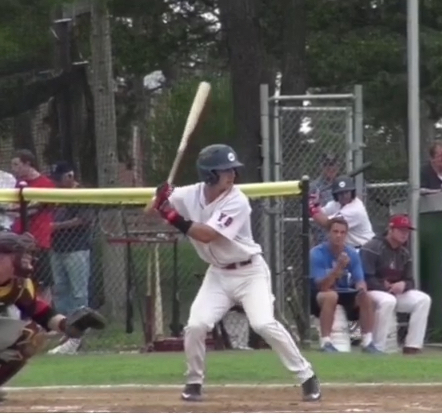
Connor Wong at-bat with the Yarmouth-Dennis Red Sox

The 23-year-old “catcher” is actually good everywhere on the field. He seems to be the poster boy of versatility. Believe it or not Wong is fairly new to the catcher position and is currently the Red Sox number one catching prospect. Wong has been seen in Red Sox colors before when he played in the Cape Cod Baseball League for the Yarmouth-Dennis Red Sox in 2015. In college, Wong played shortstop, third base, and catcher. He also has played other positions in summer collegiate baseball as in, left field and has dabbled with pitching throwing over 90 mph on the hill. 

Jeter Downs:
Jeter Downs playing with the Los Angeles Dodgers organization

Yes, he is named after former New York Yankee Derek Jeter and his older brother, Jerry Downs, is a first baseman in the Red Sox organization. Jeter Downs is scouted mainly for his defense at shortstop, but has the potential to be a middle-infielder with some power at the plate. With Xander Bogaerts locked in at shortstop, hopefully Downs can be on the other side of a double play ball at second for the Red Sox, but will likely spend some time in the minors this season. 

Alex Verdugo:
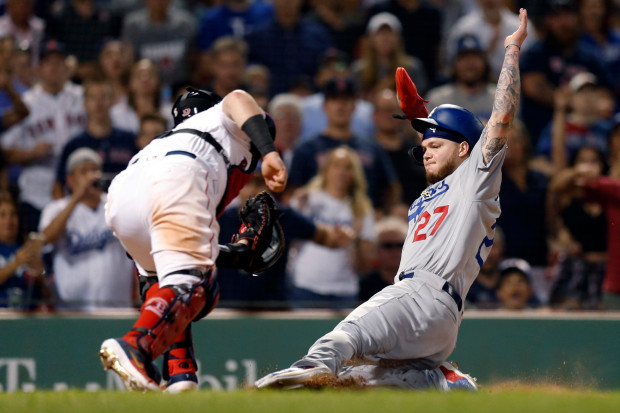
Boston Red Sox’s Christian Vazquez tags out Los Angeles Dodgers’ Alex Verdugo (27) at home plate during the 11th inning of a baseball game in Boston, Sunday, July 14, 2019. (AP Photo/Michael Dwyer)

Verdugo had some experience with the Dodgers starting line-up and has played all three outfield positions with them. Verdugo started making his name after his 11th inning walk-off homerun against the Colorado Rockies during last year’s season. Verdugo has a cannon from the outfield as well, although he’s not Mookie Betts. Verdugo will be known as the player who will ‘replace’ Betts, which will bring a lot of scrutiny if he performs poorly, especially in the city of Boston. 

UMass Student reactions:
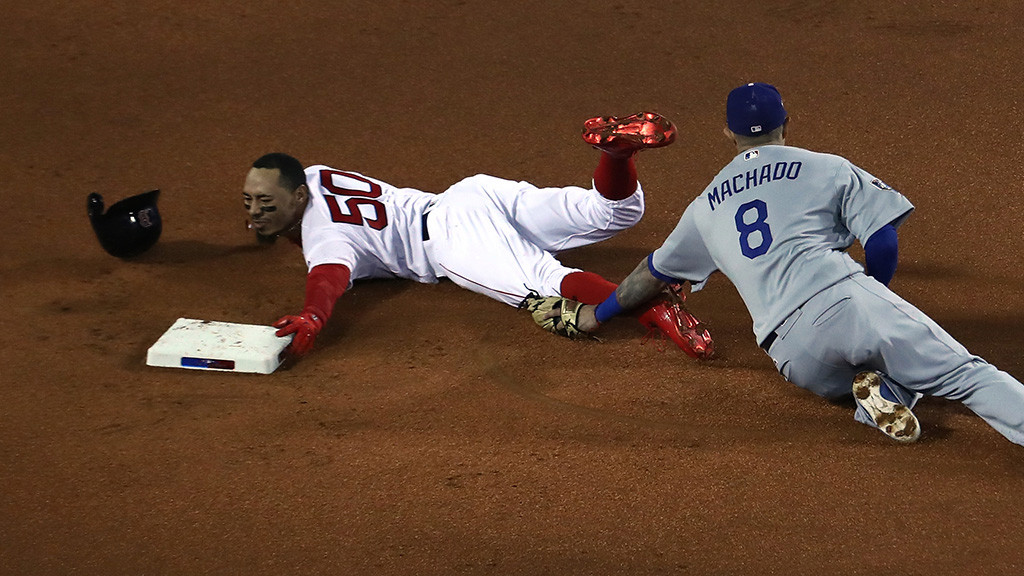
Mookie Blues

Mookie Betts and David Price leave Boston to join the Los Angeles Dodgers in a true blockbuster deal. The trade included the Twins, Dodgers and Red Sox. Instead of getting Dustin May, Joc Pederson, or Jeter Downs, the Red Sox stayed true to their word of wanting to get under the luxury tax threshold and acquired Alex Verdugo, who is currently not 100% healthy and Brusdar Graterol from the Twins. Chaim Bloom’s first real move is really setting the standard of flexibility, mind you the Red Sox are not a small market team.  

A pitcher’s worst nightmare is going to be pitching against this Dodgers line-up that includes Mookie Betts (2018 AL MVP) and Cody Bellinger (2019 NL MVP). The Dodgers offense last season looked like this:

NL Rank
Runs PG5.51st
HR2791st
Slug pct.4721st
OPS.8101st

*Note* The Angels acquired Joc Pederson in the midst of this.

David Price will also make a big impact on the already stacked rotation of the Dodgers. According to SportsCenter, the projected starting rotation will be:

  1. Clayton Kershaw
  2. Walker Buehler
  3. David Price
  4. Julio Urias
  5. Alex Wood

Mookie Betts will make $27 million this year and David Price has three years $96 million left on his contract. Price and Betts were key figures to the 2018 World Series Red Sox team when they beat the Dodgers four games to one.

No Cheering in the Press Box

The cardinal rule of working in the press box is that there is no cheering and all members of the press box remain professional. Part of journalism is remaining unbiased and telling the story of how it is. Cheering or rooting for a certain team can have the resemblance of  favoring one side and can affect the credibility you have as a writer.

The press box is seen as an office space in the sports world. As a writer, you attend sporting events to do your job. The venue is a place of work instead of being a fan. Granted the majority of sportswriters went into this profession because of their passion for sports so there are plays that will cause excitement internally but their demeanor should reflect their bearing. Is it possible for writers to remain completely unbiased? It’s hard to say, writers have a strong integrity with their writing because of the credibility factor. Behind closed doors I’m sure there are writers who root for teams. A good idea for writers is to root for a team that they don’t write about. For example, Chris Cotillo of Masslive is mainly a writer for the Red Sox and shows outward support for the University of North Carolina athletics. 

No cheering in the press box is an unofficial rule as with in baseball you don’t bat flip after a homerun or next at bat you catch a ball to the ribs. According to Jason Linden of The Hardball Times, “The point everyone seemed able to agree on was that “no cheering…” means that, effectively, it’s an office environment. Beyond that, there was also general agreement that writers are not supposed to root for the teams they cover — even internally.” 

The significance of this well-aged unwritten rule is solely based on keeping a professional appearance. I’m continuing to compare this matter to baseball’s unwritten rules because of the similarities. Baseball is littered with unwritten rules and apparently so is journalism. In baseball it’s not regular to see players, coaches, managers, etc to have personalities and if a player is shown to have a personality, they’re often ridiculed. In journalism the same thing applies. One case that stands out is when the Las Vegas Golden Knights accused Nashville reporters of cheering in the press box during a game between the Knights and Predators in December of 2017. The accusations took to Twitter and blew up, there were tweets deleted and apologies galore and there were hints of possible media members losing their credentials over this. 

I understand the work side of not cheering in the press box because it is a work environment or an office space scene but an unpopular opinion of mine is that it is an out-dated ‘rule’. I personally can abide by this rule because of the respectfulness factor and the unbiased status of it. I believe that not cheering is just a common courtesy more than an unwritten rule.   

Kobe

The reactions across the board about Kobe Bryant’s death were pretty similar. Of the people we interviewed as a group, it was shown that Kobe had some sort of nostalgic appearance amongst them. The most popular phrase I heard was, “I grew up watching him.” They idolized him and this generation Kobe was our ‘Michael Jordan.’ The questions we asked UMass students were, “How will you remember Kobe Bryant?”, “Where were you when the news broke and what was your reaction?”, and “Should journalists be reporting on the prior rape case?”

All the students questioned were in shock and disbelief of Kobe’s death. When they found out that TMZ were the first to report it, they thought it was a hoax because of TMZ’s reputation as a tabloid organization. Brandon Estrada of UMass said,  “I was at my house and no one believed me. I saw it on Twitter and was like ‘Yo, Kobe just died,’ and everyone was like ‘You’re messing with me.’ It was interesting to see the way the news trickled in because it wasn’t like a lot of verified accounts, it was more like just unverified.”

The tricky thing about the interviews were the order in which we asked them, when the first two questions were asked, they believed it was going to be a whole-heartedly piece. You could see the nostalgia radiate off their face and could hear it in their voice but then we asked them the final question and the interviewees were taken back and had confusing feelings on the rape allegations of 2003. Personally, it was tough to ask that question because it was a tragedy that pulled at the heart-strings of many especially with the death of his daughter. Some of the answers we received was that we (as reporters) have to wait but should mention it later on. The other answers mentioned that we should report it despite how it looks because it is part of his legacy. The students that were a part of the interviews were at a very young age when the allegations took place. 

Design a site like this with WordPress.com
Get started